

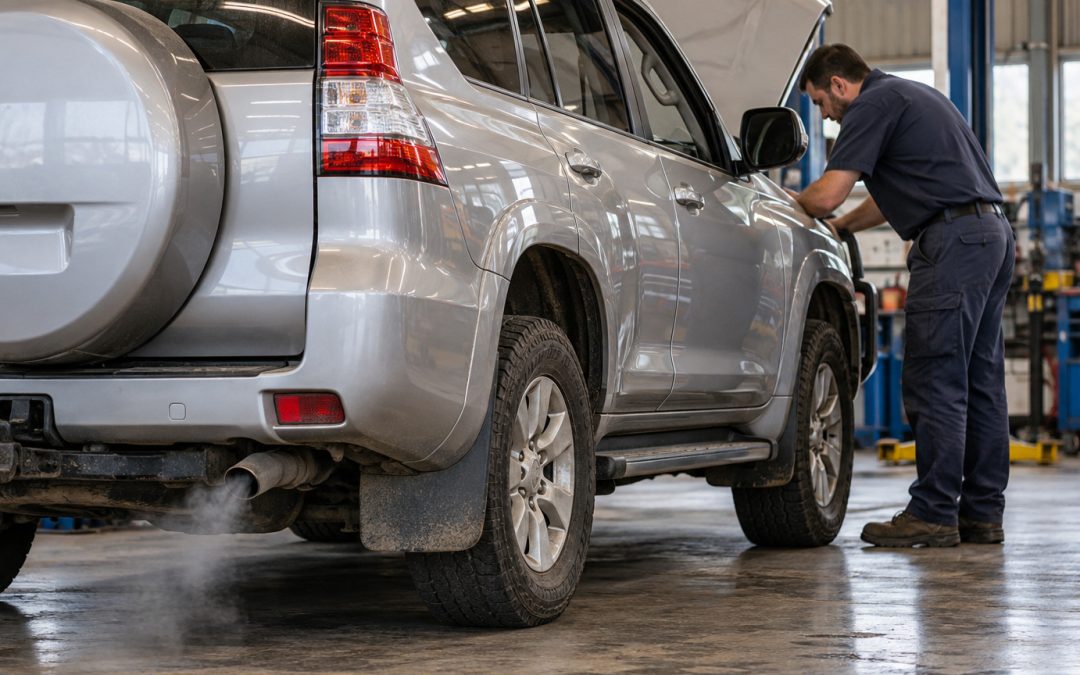
Black smoke from a diesel exhaust means unburnt fuel. The engine is getting more fuel than it can burn, or not enough air to burn what it has. Hard starting is usually a different problem. The engine is not reaching the heat or the fuel pressure it needs to fire. Each has a short list of causes on its own. Put two together and the list shortens fast. That is the useful thing about diesel warning signs. They come in clusters, and the cluster names the fault.
Most people arrive at this with one thing. A puff of black smoke pulling away from the lights. A long crank on a cold morning. A ute that will not pull up a hill the way it did last year. The table sets out the common combinations and how long each can wait.
| What the car is doing | Most likely cause | How urgent |
|---|---|---|
| Black smoke under acceleration or towing | Not enough air, from a blocked filter or a turbo down on boost | Book it in this week |
| Black smoke at idle, with a rough idle alongside it | An injector spraying badly, or a fouled exhaust gas valve | Book it in this week |
| Long crank on a cold morning, fine once warm | Glow plugs, which preheat the cylinders for a cold start | Mention it at the next service |
| Long crank hot or cold, sometimes cutting out | Fuel delivery: a tired pump, a blocked filter, or air in the line | Book it in this week |
| Power loss with a DPF warning light on | A soot-loaded filter, usually from short-trip driving | Drive it at highway speed, then book it if the light stays |
| White or blue smoke instead of black | White is unburnt fuel or coolant, blue is oil | Stop now if the white smoke smells sweet |
This is a general guide. A diesel can show the same symptom for more than one reason, and only a scan and an inspection will separate them.
What does black smoke from a diesel exhaust mean?
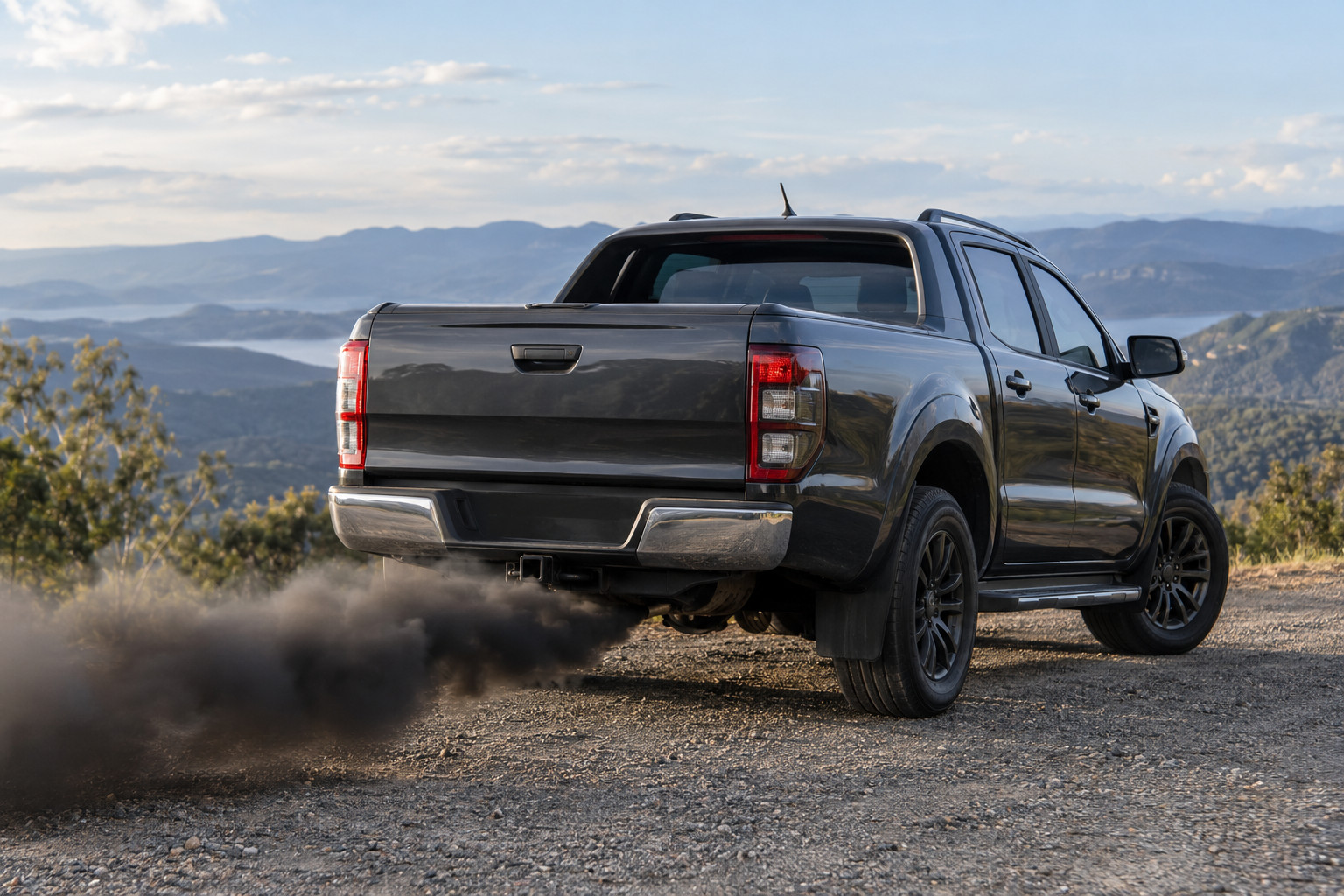
Black smoke is diesel that left the engine without burning. A diesel lights its fuel by compressing air until it is hot enough to do the job. Upset that balance and the surplus goes out the exhaust as soot. When the smoke appears tells you which cause is likely.
A blocked air filter or a restricted intake. The cheapest cause, and the most common on a work vehicle. Smoke shows up under load, when the engine wants the most air and cannot get it. A ute that lives on gravel or around building sites fills a filter far faster than the service interval assumes.
Injectors that are worn or spraying poorly. An injector should deliver a fine mist at a set pressure. A worn one dribbles, and fuel arriving as droplets does not burn cleanly. The tell is smoke at idle with a rough note underneath it. There is more here on what a worn or dirty injector looks like from the driver’s seat.
A fouled EGR valve. EGR stands for exhaust gas recirculation, a valve that feeds some exhaust back into the engine to keep combustion temperatures down. Soot builds on it over the years until it sticks open, leaving the engine breathing its own exhaust instead of fresh air. Short-trip driving brings that on fastest.
A turbo down on boost. A turbocharger is a fan driven by the exhaust that forces extra air into the engine. When it leaks, sticks or wears, the fuel side keeps delivering while the air side falls behind. Listen for smoke under acceleration with a clear loss of pull.
Why is my diesel hard to start?

Hard starting means long cranking before the engine catches, or several attempts to get it going. The most useful thing you can work out yourself is whether it happens cold, hot, or both. That one observation splits the causes in half.
Glow plugs, if it only happens cold. A glow plug is a small heater in each cylinder that warms the air for a cold start. As they fail, the car cranks longer on cold mornings and starts normally once warm. A puff of white smoke that clears after a minute often goes with it.
A weak battery, wearing a fuel fault’s clothes. A diesel needs a fast crank to build compression heat. A battery that still starts a petrol car happily can turn a diesel too slowly to fire. Rule this out first, because it is quick to test and cheap to fix.
Fuel delivery, hot and cold alike. A blocked filter, a tired lift pump or a worn high-pressure pump all leave the injectors short. The engine may cut out at idle as well. Air in the lines looks similar but behaves differently. The car starts on the second or third try, having pushed the air through, then repeats it next morning.
Injectors leaking back. Worn injectors bleed pressure away overnight, so the first start of the day takes far longer than the rest. Hard to start in the driveway but fine all day after that is the signature.
Why is my diesel losing power with the DPF light on?

A DPF is a diesel particulate filter. It sits in the exhaust and traps the soot a diesel makes, so it does not go out the tailpipe. The filter fills over time and empties itself by burning the soot off at high temperature. That burn-off is called regeneration, and it needs a sustained run at speed.
Here the driving pattern matters more than the vehicle. Think of a ute on short runs around the airport freight estates, a courier working Tullamarine and Gladstone Park, or a van that never gets past sixty. None of them give the filter that run. Soot loads up and the light comes on. The engine then drops into limp mode, a reduced-power setting that protects it and gets you home. There is a separate piece here on the wider damage that short-trip driving does.
What to do next is the part people get wrong. A steady light on a car that is otherwise driving normally is a request for a longer run, not a warning to pull over. Take it out on the Tullamarine Freeway, the Ring Road or the Hume and hold a steady highway speed. Australian sources put the drive at anywhere from twenty minutes to an hour, and the procedure varies by make, so check the owner’s manual. Finish the run rather than parking halfway, because a regeneration cut short leaves the soot where it was.
Book it in if the light stays on after a good run, if it starts flashing, or if the car is in limp mode. The filter is then too full to clear itself. A scan reads the soot and ash load off the engine computer. That is what tells the mechanic whether it can be cleaned or has gone too far. Removing or disabling a DPF is not an option on a road-registered car. EPA Victoria’s position is that vehicles must meet the emissions standards they were built to.
Power loss on its own, with no smoke and no DPF light, is a different enquiry. The causes of power loss on a petrol engine are set out separately on this site.
Black, white or blue: what the colour of the smoke means
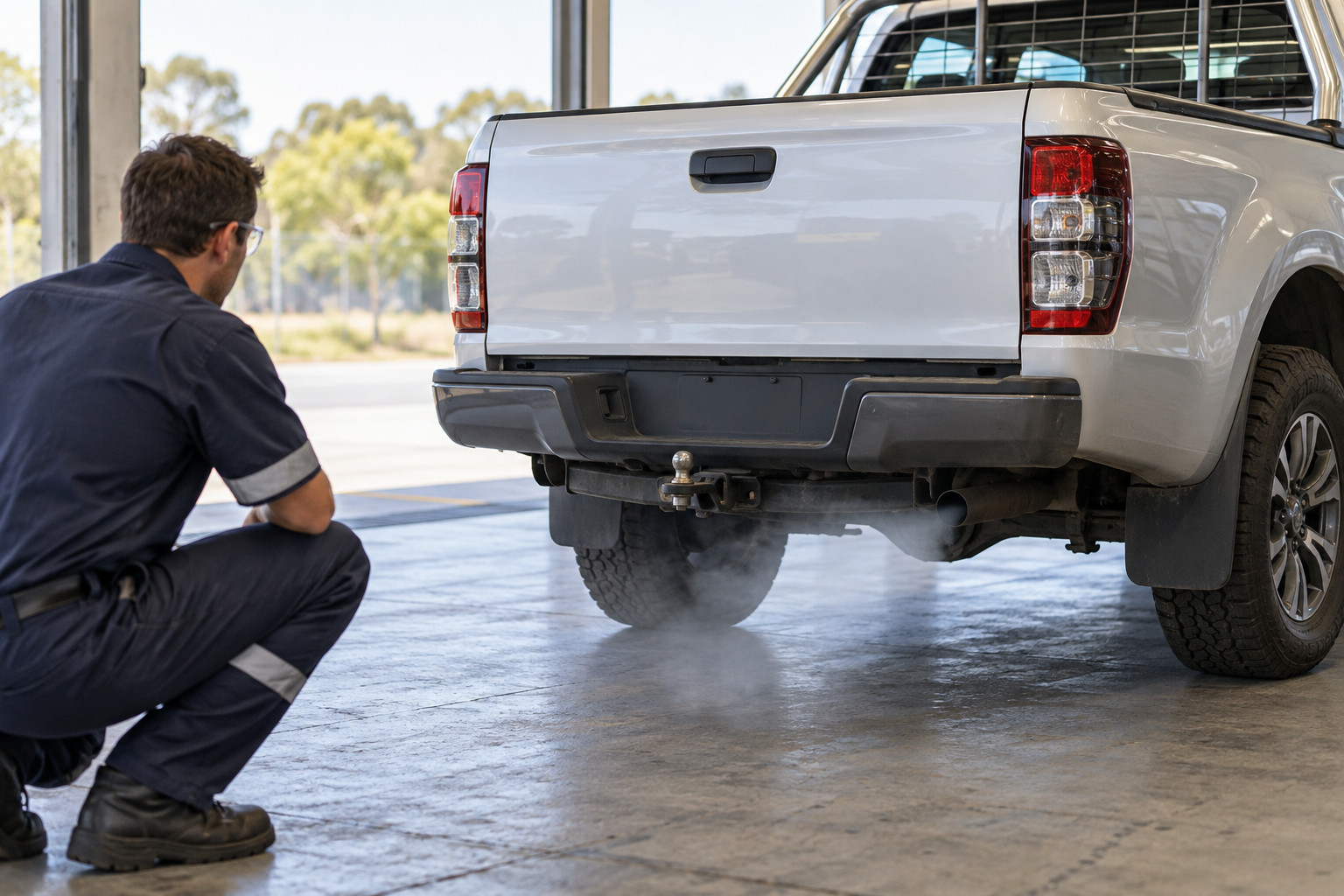
Colour is the fastest sort you can do standing behind the car, and each one points at a different system.
Black is fuel, from the causes above, and usually the least serious. Blue is oil getting past worn seals or rings, alongside rising oil use between services.
White splits in two, and the difference matters. Thin white on a cold morning that clears as the engine warms is condensation or a glow plug. Thick white that keeps coming points at coolant in the cylinders, especially if it smells faintly sweet. That one is not a wait-and-see item.
Which diesel warning signs can wait, and which cannot?

Not everything on this page is urgent, and saying so is what makes the urgent items land. Sort what your car is doing into one of these three.
The cost of waiting is the argument for the first two. A symptom caught early is often a scan and an air filter. The same fault left to run can take the injectors with it, at $300 to $1,200 each fitted on a four cylinder that needs four. A DPF cleaned in time runs $100 to $800. Replaced, it is $1,500 to $6,000 or more. That gap is the whole case for booking it in.
- Stop and get it looked at. Thick white smoke with a sweet smell, a sudden loss of power with smoke, or a car in limp mode on the freeway. Keep driving and a repair turns into a replacement.
- Book it in this week. Black smoke under load, black smoke with a rough idle, hard starting hot and cold, or a DPF light still on after a good highway run.
- Mention it at the next service. A longer crank on cold mornings only, a puff of smoke on start-up that clears, or fuel use that has drifted rather than jumped.
The most common reason a DPF light comes back a week after a clean is that the driving pattern that blocked it has not changed. Raise that when you go in, because the fix may be a conversation about the car’s weekly run rather than another filter. You can see what diesel servicing and DPF work involves on the VP Autocare service page.
So start with what you noticed: the smoke colour, when it appears, and whether the car starts differently cold and hot. Those three answers narrow it a long way before anyone opens the bonnet. Bring them with you when you book a time.
Frequently asked questions
Can a blocked DPF be cleaned, or does it have to be replaced?
Cleaning is the first option in most cases, and it costs a fraction of a new filter. A filter left blocked for a long time, or one damaged inside by repeated failed burn-offs, is past saving. The measurements taken at the workshop are what settle it, not the age of the car.
Is it safe to keep driving with the DPF light on?
For a short while, yes, and driving is part of the fix rather than a risk. What you must not do is treat a steady light as something to leave for a month. It stops being safe once the car drops into reduced power or the light begins flashing.
Does a diesel need a long drive every so often on purpose?
If the car only ever does short trips, then yes, and it is worth putting in the diary. Give it a sustained run at highway speed often enough that the light never appears. How often depends on how short the usual trips are, so the honest answer is as often as it takes.


