

Signs your fuel injectors need cleaning or replacing
Your car’s been using more fuel than usual. It hesitates when you put your foot down, or the idle feels rough and uneven. You know something’s off, but you’re not sure what.
These are classic signs of dirty or failing fuel injectors. The fix is usually straightforward, but leaving it too long can turn a simple clean into a more expensive repair.
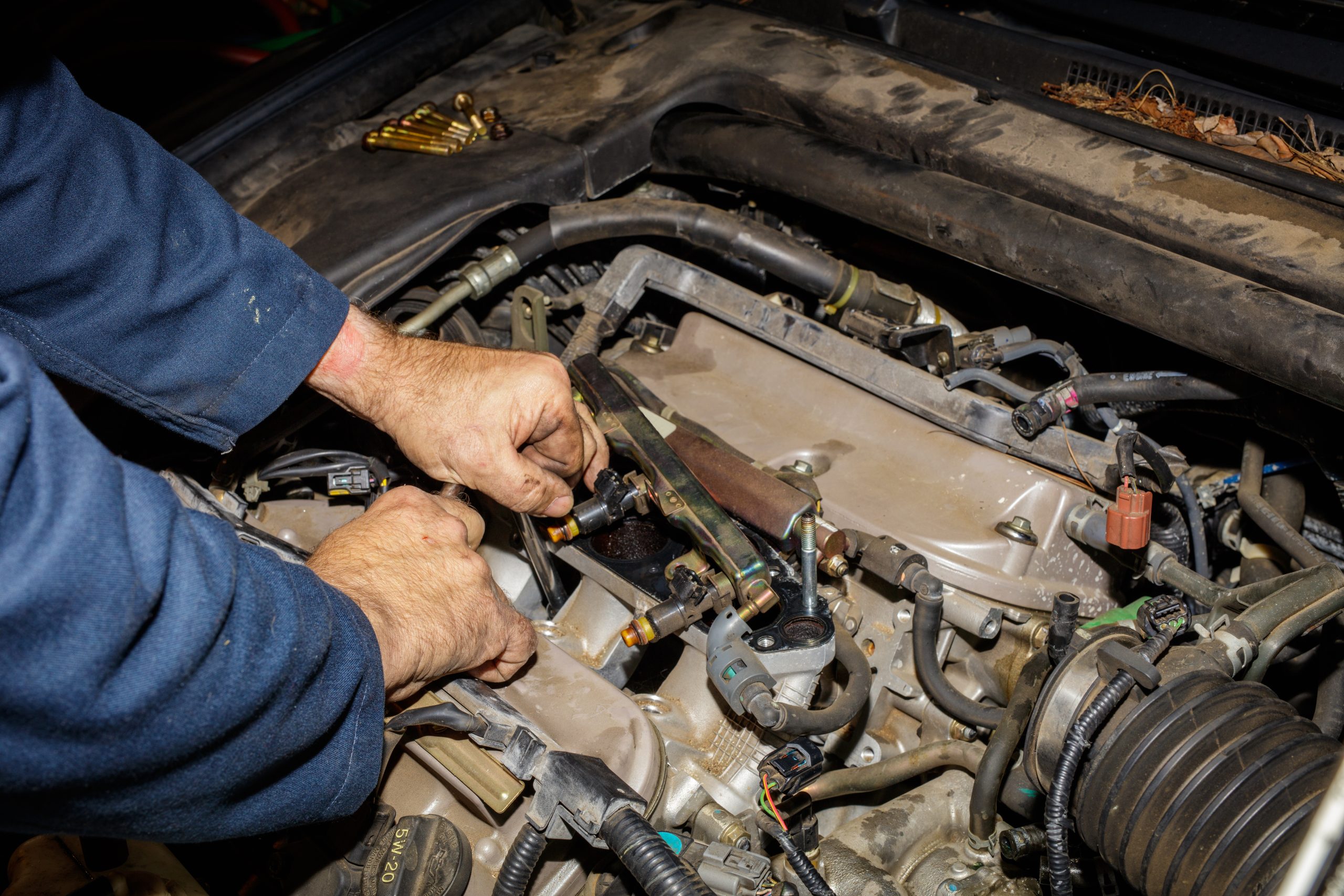
What do fuel injectors do?
Fuel injectors spray a precise amount of fuel into each engine cylinder at exactly the right moment. When they’re dirty or worn, that precision drops. The engine gets too much fuel, too little, or fuel at the wrong time. That’s when you start noticing problems.
At a glance: fuel injector symptoms and what they usually mean
| Symptom | What’s likely happening | How urgent |
|---|---|---|
| Rough or uneven idle | Inconsistent fuel delivery at low speed | Book within a few weeks |
| Hesitation on acceleration | Delayed or restricted fuel spray | Book within a few weeks |
| Higher fuel consumption | Injector leaking or delivering too much fuel | Monitor, book if it persists |
| Engine misfires | One or more cylinders not getting enough fuel | Book soon |
| Check engine light | ECU has flagged a fuel delivery fault | Book soon |
| Fuel smell from the exhaust | Unburnt fuel passing through the engine | Book soon |
What are the signs of fuel injector problems?
Not every symptom means your injectors are the issue, but if you’re noticing more than one of the following, they’re worth checking.
Rough or uneven idle. The engine shakes or stumbles when you’re sitting still at traffic lights or waiting in the car park. Dirty injectors deliver fuel inconsistently, so the engine can’t hold a steady idle speed.
Symptoms you’ll notice:
- Engine vibrating or shaking at standstill
- RPM needle fluctuating up and down at idle
- Occasional stalling when you come to a stop
- The roughness eases once you start driving
Hesitation on acceleration. You press the accelerator and there’s a noticeable delay before the car responds, or it stumbles briefly before picking up speed. This is common in stop-start driving around the Tullamarine Freeway and Western Ring Road, where you’re constantly accelerating from low speeds.
Symptoms you’ll notice:
- Brief delay between pressing the pedal and the car responding
- A stumble or flat spot as you pull away from lights
- The car feels sluggish under load, especially up hills
- Intermittent rather than constant – worse some days than others
Higher fuel consumption. If you’re filling up more often without changing your driving habits, a dirty or leaking injector could be sending too much fuel into the cylinder. The engine compensates by running rich, and your fuel costs go up.
Symptoms you’ll notice:
- Fuel economy dropping by 10–20% or more
- Filling up more frequently on the same routes
- A faint fuel smell that wasn’t there before
- No change in driving habits or tyre pressure
Engine misfires. A misfire feels like a brief jolt or stutter, especially under load. It happens when one cylinder doesn’t get enough fuel to ignite properly. You might also see the check engine light come on.
Symptoms you’ll notice:
- A jolt or stutter under acceleration
- Momentary loss of power at speed
- Check engine light flashing or staying on
- Rougher engine note than usual
Check engine light. A persistent check engine light can point to dozens of issues, but fuel injector faults are among the more common triggers. A diagnostic scan will confirm whether the injectors are involved.
Fuel smell from the exhaust. If unburnt fuel is passing through the engine because an injector is stuck open or delivering too much, you may notice a petrol smell from the tailpipe. This is different from a fuel smell inside the cabin, which usually points to a leak in the fuel lines or tank rather than an injector fault.
Cleaning or replacing – how does your mechanic decide?
Not every injector problem means replacement. In most cases, a professional clean is enough to restore normal performance.
When cleaning is enough. Carbon buildup and varnish deposits are the most common injector issues, especially in cars that do a lot of short trips where the engine doesn’t reach full operating temperature. A fuel system flush or ultrasonic cleaning removes those deposits and restores the spray pattern. This is the most common outcome.
When replacement is needed. If an injector has an electrical fault, a cracked body, or is permanently stuck open or closed, cleaning won’t fix it. These are mechanical failures, and the injector needs to come out. If one injector has failed at high mileage, your mechanic may recommend replacing the full set, because the others are likely not far behind.
What you’ll pay: The following figures are general Australian market ranges. Actual costs vary depending on your vehicle’s make, model, engine type, and the workshop you choose.
- Fuel injector clean (on-car flush or ultrasonic): $50–$250
- Single injector replacement (parts and labour): $250–$500
- Full set replacement, 4-cylinder engine: $800–$1,500
What causes fuel injectors to fail?
Injectors don’t usually fail overnight. The buildup is gradual, which is why the symptoms often creep in rather than appearing suddenly.
Short trips and stop-start driving. Engines that don’t reach full operating temperature regularly are more prone to carbon buildup in the injectors. If most of your driving is short runs to the airport, the shops, or between Tullamarine’s industrial precincts, your injectors are working harder to stay clean than those in a car doing long highway stretches.
Poor fuel quality. Lower-grade fuels contain more contaminants that leave deposits on injector tips over time. This doesn’t mean you need to run premium in every car, but consistently using the cheapest fuel available can contribute to buildup.
Infrequent servicing. Fuel filters catch debris before it reaches the injectors. A clogged or old fuel filter lets more contaminants through, accelerating injector wear.
Age and mileage. Petrol injectors generally last between 100,000 and 200,000 km, but this varies by vehicle and driving conditions. Cars that have been well maintained with regular servicing tend to sit at the higher end of that range.
How urgent is it?
Dirty fuel injectors aren’t an emergency, but they’re not something to sit on for six months either.
The longer injectors run dirty, the worse the symptoms get. An engine that’s misfiring or running rich sends unburnt fuel into the exhaust system, which can damage the catalytic converter over time. A catalytic converter replacement costs significantly more than an injector clean.
- Mild symptoms (slightly rough idle, small drop in fuel economy): Book an inspection within the next few weeks
- Moderate symptoms (noticeable hesitation, fuel economy down significantly): Book within a week or two
- Serious symptoms (regular misfires, check engine light on, fuel smell): Get it looked at as soon as possible
Frequently asked questions
How often should fuel injectors be cleaned?
There’s no single interval that applies to every car. A common guideline is every 40,000 to 50,000 km, but your driving patterns matter more than the number alone. Cars that mostly do short trips or sit idle for long periods may benefit from more frequent cleaning. If your engine is running smoothly and fuel economy is steady, your injectors are probably fine.
Can you clean fuel injectors yourself?
You can add a fuel system cleaner to your tank at the servo, but this is a maintenance measure, not a fix for injectors that are already causing symptoms. If you’re experiencing rough idle, hesitation, or misfires, a DIY additive is unlikely to resolve the issue. Professional cleaning uses ultrasonic equipment or pressurised chemical flushing that reaches deposits a pour-in additive can’t.
Do fuel injector cleaners from the servo actually work?
They can help as a preventative measure if used regularly in a healthy fuel system. Think of them like mouthwash – fine for maintenance, but not a substitute for the dentist if you’ve got a problem. If your injectors are already causing symptoms, a bottle of cleaner in the tank won’t fix it.
How long do fuel injectors last?
Most petrol fuel injectors last between 100,000 and 200,000 km with proper maintenance. Direct injection engines tend to be more susceptible to carbon buildup than port injection engines, so they may need cleaning earlier. Diesel injectors often last longer but cost significantly more to replace.
Can one bad injector affect the whole engine?
Yes. A single faulty injector throws off the air-fuel balance across the engine. The engine management system tries to compensate, but it can only adjust so much. One misfiring cylinder increases the load on the others, raises exhaust temperatures, and can trigger the check engine light. If left long enough, the unburnt fuel can damage the catalytic converter, turning a $250 injector job into a $1,000+ exhaust repair.


