

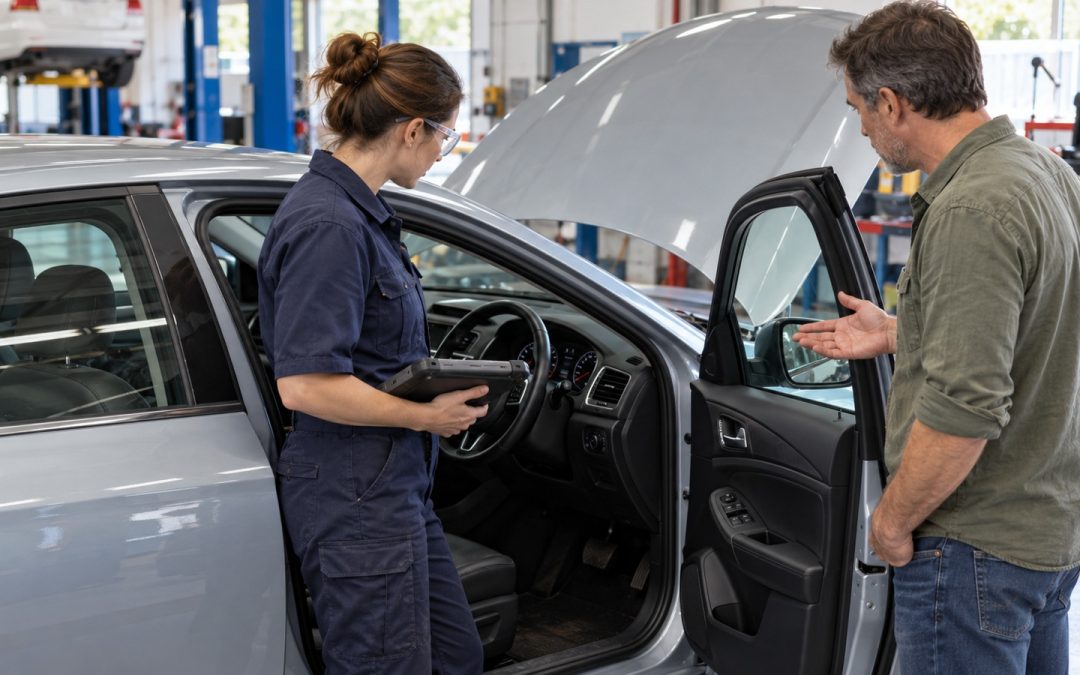
Heavy steering or a new whine is a sign that the power steering system is not giving its normal assistance. On a car with hydraulic assistance, Ford’s owner guidance names low fluid as a cause of heavy or uneven steering effort. Where the noise is excessive, the same guidance points first at the fluid level. On a car with electric assistance there is no fluid reservoir at all. The fault is electrical, and a warning message is often the first sign of it.
The wheel going heavy is hard to miss. It tends to show up at walking pace. Turning into a tight bay in one of the multi-storey car parks near the airport winds the wheel from lock to lock. That is where the effort shows. The whine is the other half of the same complaint.
Why can the steering suddenly feel heavier?

Power steering adds effort to the effort you put in. Take that help away and the wheel does not lock up. It just gets heavy. Ford’s owner guidance says the same from the other direction. If the system breaks down, or you switch the engine off, you can still steer the car. It simply takes more effort.
Cars do not all make that help the same way. One uses a pump and fluid. Another uses an electric motor on the steering itself. Some use both. Ford’s manual for one of its hydraulic trucks describes an electronic torque overlay. It adds extra assist to the hydraulic gear when conditions call for it. The hydraulic side still provides most of the assistance. So the badge on the boot does not settle which kind you have.
Not every heavy wheel is an assistance fault. The steering also runs through joints, the rack that turns the front wheels, and the tyres. Wear or binding in any of those can add effort of its own. A car that drifts to one side on a straight road is a different complaint. Our article on pulling to one side deals with that one. Ford keeps a separate checklist for a car that wanders or pulls, and none of it is about lost assistance.
What can a hydraulic steering whine mean?
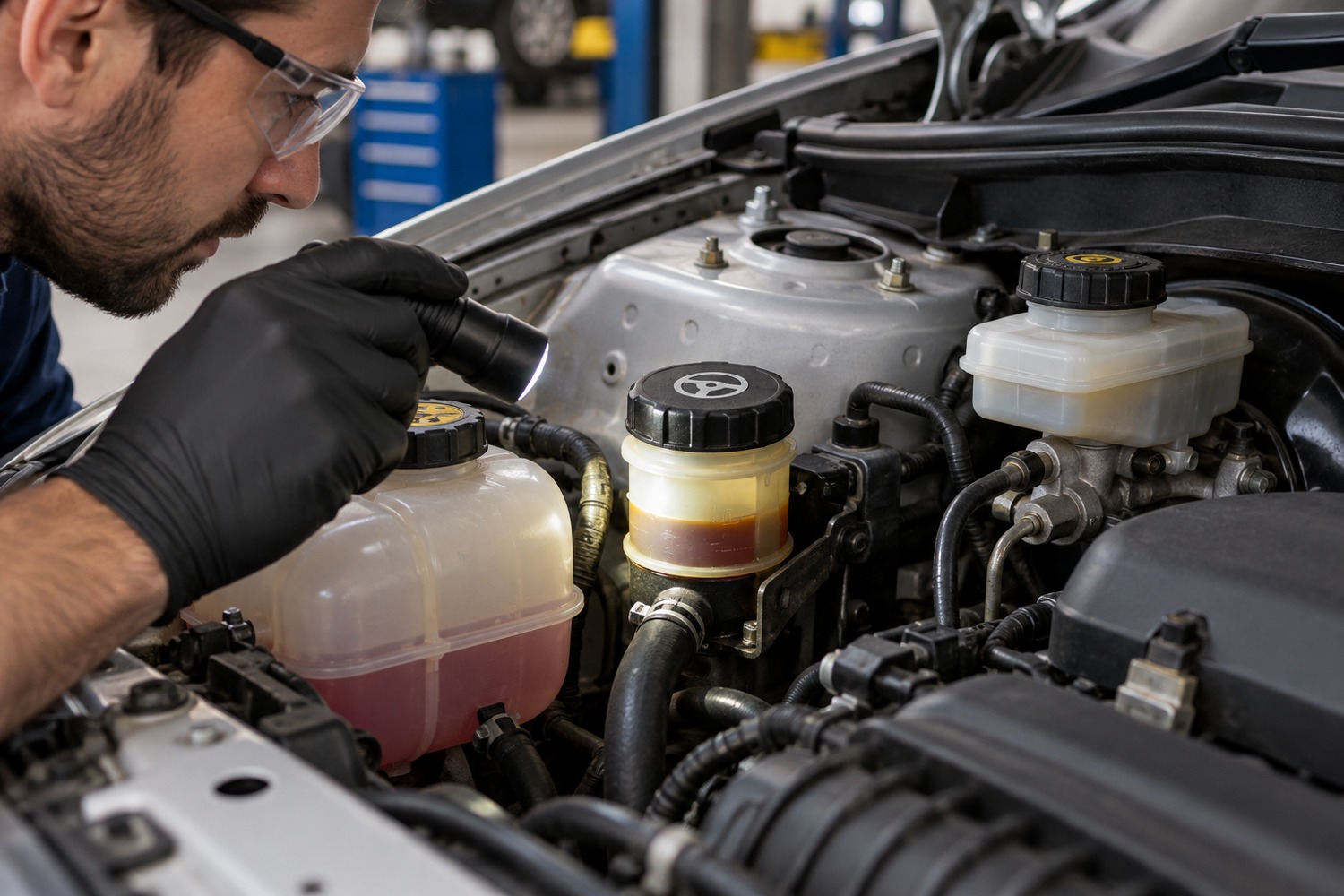
A hydraulic system uses a pump to push fluid through the steering. That fluid is what reduces the effort at the wheel. Ford’s guidance for its hydraulic systems is direct about noise. Some noise is normal in operation, it says. Where the noise is excessive, that guidance points first at the fluid level. Heavy or uneven steering effort may be caused by low power steering fluid. It also says not to drive the car with the level below the minimum mark on the reservoir.
Low fluid is a finding rather than an answer. A top-up does not say where the fluid went. If the level keeps dropping, something is letting it out. That is the thing worth finding. The pump, a hose, a seal, the rack, or air or dirt in the fluid can all be part of the picture. Where the pump is driven by a belt, the belt is in the picture too. Which one it is comes from an inspection, not from the sound.
The same manual publishes two habits for hydraulic systems that are worth knowing. Do not hold the wheel at full lock for more than three to five seconds with the engine running. Avoid steering back and forth with the engine revving, because it can overheat the system.
Can electric power steering have the same fault?
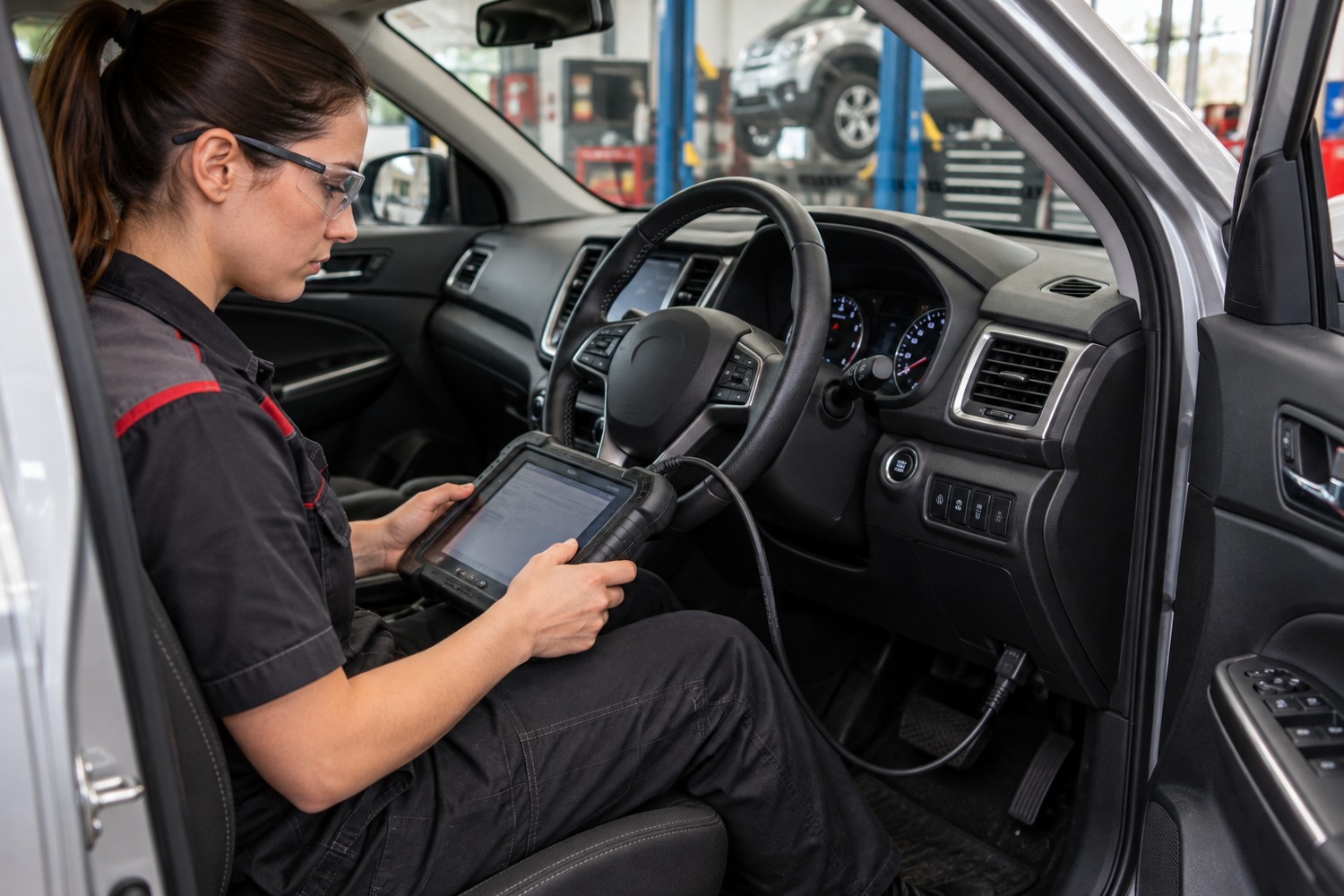
It can go heavy, but it cannot be a fluid problem. Ford’s Australian-market manual for a vehicle with electric power steering is plain about it. There is no fluid reservoir, and no maintenance is required. There is nothing to check and nothing to top up.
Electrical supply and control do the job the fluid used to. Ford says the system runs diagnostic checks on itself continuously, and that a detected fault puts a message on the information display. It also says that if the car loses electrical power while you are driving, the electric steering assistance is lost. You can still steer, and it takes more effort.
Assistance can fade and come back without anything being broken. Ford’s manual notes that extreme continuous steering can raise the effort needed. That extra effort is there to prevent overheating and permanent damage. Ordinary driving lets the system cool and return to normal.
None of that hands you a code to read or a sequence to try at home. No single reset works across every car. A message on the display is a starting point for a workshop rather than a diagnosis. The overlap matters here too. A car can have hydraulic assistance with an electronic layer over it, so one answer does not cover both halves.
When should you stop driving?

Stop when the control of the car has changed, or when the car tells you to. Ford’s warning for a detected steering fault is plain. Stop the vehicle as soon as it is safe to do so, and have the system checked as soon as possible.
The harder case is the one that feels fine. Ford warns that a detected error may leave no difference at the wheel, yet a serious condition may exist. Failing to have it checked, it says, may result in loss of steering control. A steering warning is worth acting on even when nothing has changed in your hands.
Being able to steer is not the same as being safe to carry on. The manual is clear that you do not lose the ability to steer a car that has lost its assistance. It is equally clear that steering it takes more effort. More effort on a quiet street is one thing. More effort in traffic, or on the turn into a driveway, is another. If the assistance drops out suddenly, get off the road somewhere safe and call for help instead of pressing on.
Which finding determines the repair?
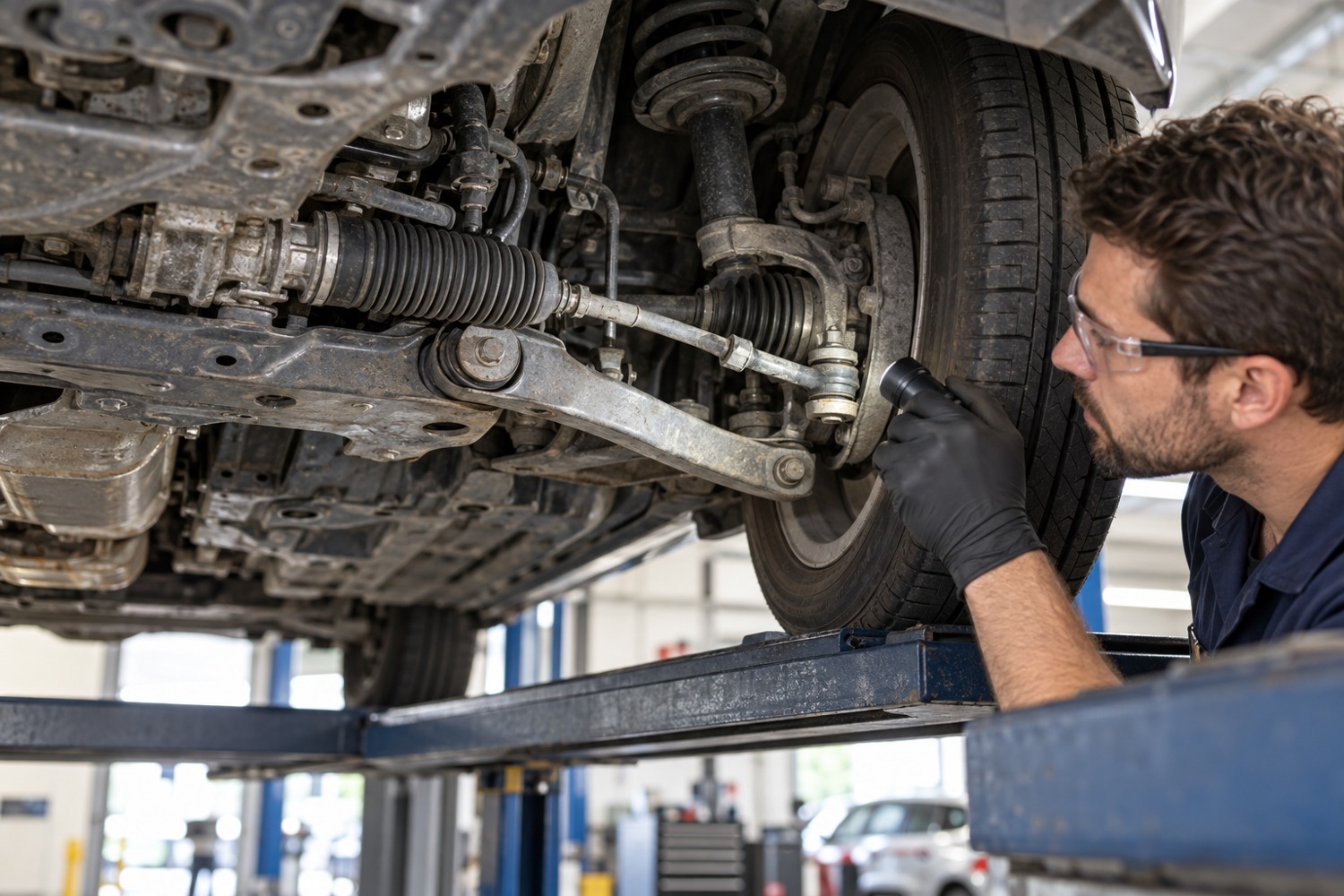
No part gets replaced until a finding calls for it, and the findings come in an order. First, which kind of assistance the car has, including whether it has both kinds. Then whether there is a leak, a real loss of assistance, or neither. Then the mechanical condition of the steering itself. Only after that does a pump, a hose, a rack, or an electrical part come into it.
Some parts can be reconditioned rather than replaced, where that suits the part and a rebuilt unit is available. Whether it is the right call is a decision for the workshop with the car in front of it.
Three things drive the price, and none of them is a secret. Access is one. AutoGuru, an Australian booking service, notes that a power steering pump is reached from above on some cars and from underneath on others. That changes the labour before any part is bought. Part choice is another, new against reconditioned. The diagnosis is the third, because an electrical fault takes a different kind of time from a leak you can see. A number quoted before anyone has looked at the car is a guess, which is why there is not one here. It is also why steering repairs start with an inspection rather than a price.
Get the steering fault assessed
If the wheel has gone heavy, or a whine has appeared, the next step is a small one. Get the car looked at while it is still a symptom rather than a failure.
The first job is working out which kind of assistance your car has, because everything after that depends on it. If a steering warning has appeared on the dash, mention it. That points the first checks at the electrical side rather than at the fluid.
If you want a workshop in Tullamarine to look at it, book a steering check and describe when the symptom shows up.
Frequently asked questions
Does heavy steering always mean pump failure?
No. Heavy steering tells you the assistance has dropped, and a pump is only one of the things that can cause that. A car with electric assistance has no pump of that sort at all.
Does electric power steering need hydraulic fluid?
No. Ford’s Australian-market manual for an electric system states that there is no fluid reservoir and no maintenance is required. There is nowhere to put fluid on those cars, so topping up is not an option.
Can a warning matter when steering still feels normal?
Yes. Ford warns that the steering may feel no different while a serious condition exists. Leaving it unchecked can end in loss of steering control. Take the warning itself as the symptom.
Should I drive after sudden loss of steering assistance?
Treat it as a reason to stop. The car can still be steered, but the extra effort is worst in slow traffic and tight turns. Find a safe spot off the road and have the car collected or assessed there.


