

Why Does My Car Smell Like Fuel Inside?
Petrol is volatile. A liquid leak in the engine bay can ignite on a hot exhaust manifold in seconds. This guide explains what causes fuel smells, how to narrow down the source based on when you notice it, and when to stop driving and call a mechanic.

Safety first: read this before you do anything else
• Do not drive the vehicle if you can see liquid fuel pooling under the car or in the engine bay.
• Do not park a car with a strong raw fuel smell in an enclosed garage.
• Do not smoke or use an open flame anywhere near the vehicle.
• If the smell is overpowering while driving, pull over safely, turn off the engine, and have the vehicle towed.
When Do You Smell It? That Is the Clue
The single most useful thing you can tell a mechanic is when the smell is strongest. Fuel systems have dozens of connection points, seals and hoses. Timing narrows the search.
Right after filling up
When you fill the tank, displaced air and fuel vapour need somewhere to go. A healthy system captures them. If the smell appears only on a full tank, the problem is usually at the rear of the vehicle.
Common culprits:
While driving or when the heater comes on
The cabin air intake sits at the base of the windscreen. If something is leaking under the bonnet, the climate control fan will pull those fumes straight into the passenger compartment. This is one of the more alarming versions of the problem, and for good reason.
Common culprits:
All the time, even parked overnight
A smell that never goes away, even when the engine has been cold for hours, usually means liquid fuel is pooling somewhere, or the car’s evaporative emissions system has failed.
The EVAP system explained:
Quick-Reference Diagnostic Table
Use this table to match your symptoms to the most likely cause and the test a mechanic will run.
| When you notice the smell | What to check first | What a mechanic will do |
|---|---|---|
| Right after filling up at the bowser | Fuel cap seal, filler neck rubber, tank breather hoses | Smoke test of the filler neck assembly |
| While driving, or when the heater kicks in | Engine bay for wet spots, fuel line connections | Fuel pressure drop test, injector O-ring inspection |
| All the time, even parked overnight | Under the car for drips, any Check Engine Light codes | EVAP system smoke test, tank integrity check |
| Unburnt fuel smell from exhaust, rough idle | Recent misfire symptoms, poor fuel economy | Exhaust gas analysis, spark plug and oxygen sensor check |
Why Guessing at the Problem Costs You More
A common trap is assuming a petrol smell means a cheap fix. Buying a new fuel cap from the auto store might clear a faint odour or a dashboard warning light. But if the smell is strong, the cap was never the issue.
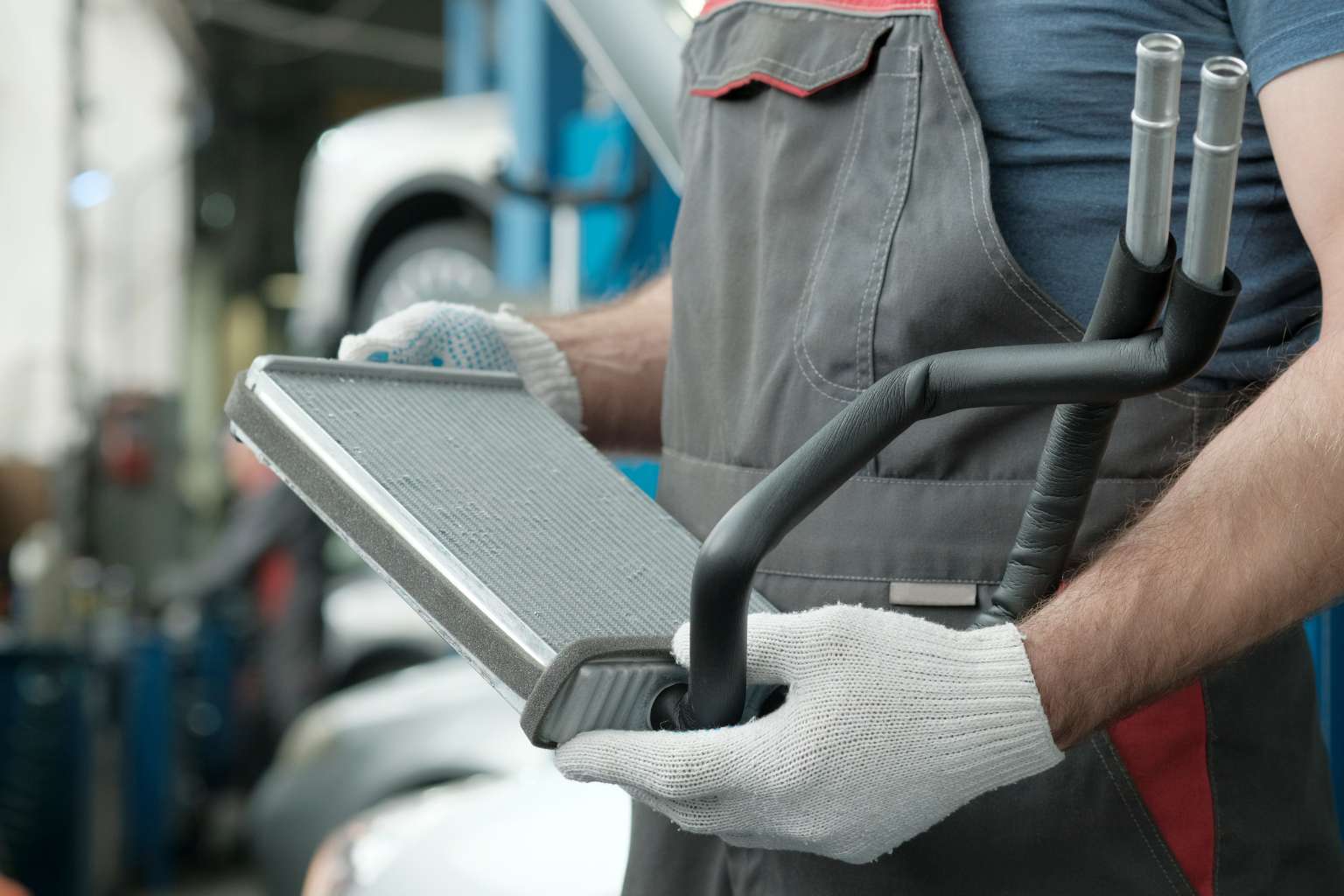
Take the EVAP purge valve as an example. Replacing one without running a smoke test first leads to repeat visits and wasted money. A smoke test pumps harmless vapour into the sealed fuel system under low pressure. Wherever the smoke escapes, the mechanic can see the exact failure point. Without this equipment, finding a hairline crack in a plastic vapour line buried above the rear subframe is close to impossible.
And sometimes the smell is not an external leak at all. A failing engine coolant temperature sensor or a stuck fuel pressure regulator can force the engine to run rich, dumping unburned fuel into the exhaust. The result is a strong petrol odour that hangs around the car at traffic lights. Diagnosing this requires reading live data from the engine control unit, not replacing random parts.
When to Book a Professional Diagnosis
If you have confirmed your fuel cap is seated properly and the smell persists, it is time for a professional inspection. Fuel systems operate under high pressure. Repairing lines and replacing injector seals requires specific depressurisation procedures to prevent fire risk.
For drivers in the Tullamarine area looking for a car service they can trust, the workshop should have smoke-testing capability and electronic fuel system diagnostics. Whether the job turns out to be a routine logbook service check or a full fuel injection service, accurate diagnosis up front saves money by ruling out unnecessary parts replacement.
If you are experiencing strong fuel leak symptoms, park the vehicle safely and call your mechanic to arrange an inspection or a tow.
This guide is written by a repair shop. Use it to compare any provider and ask to see evidence for any recommendation.
For more information on general vehicle safety and maintenance standards, refer to the vehicle safety guidelines published by the Australian Government’s Department of Infrastructure, Transport, Regional Development, Communications and the Arts at infrastructure.gov.au.

Related Reading
- What is included in a professional fuel injection service?
- Why Your Car’s Ignition System is Important and How to Maintain It
- How Often Should You Get a Full Car Service?
FAQs
Is it safe to drive my car if it smells like petrol?
It is generally not safe. If you can smell raw fuel inside the cabin, there is a leak in the pressurised fuel system or evaporative emissions system. A liquid leak in the engine bay poses a severe fire risk.
Why does my car smell like fuel only when the heater is on?
The cabin air intake is located near the engine bay. If a high-pressure fuel line or fuel injector seal is leaking under the bonnet, the heater fan will pull those fumes directly into the passenger cabin.
Can a bad spark plug cause a fuel smell?
Yes. A failed spark plug causes an engine misfire, meaning the fuel injected into that cylinder is not burned. This raw fuel is pushed into the exhaust system, creating a strong unburnt fuel smell from the tailpipe.
What is an EVAP leak?
The Evaporative Emission Control (EVAP) system captures fuel vapours from the petrol tank and routes them to the engine to be burned. A leak in this system allows raw fuel vapour to escape into the atmosphere and often into the cabin.
Will a loose fuel cap make my car smell like petrol?
Yes. A loose, missing, or damaged fuel cap is a common cause of a faint petrol smell, especially at the rear of the vehicle or immediately after filling up.
How does a mechanic find a fuel leak?
Mechanics use visual inspections, fuel pressure drop tests, and smoke machines. A smoke test pumps visible, harmless vapour into the sealed fuel system to reveal exactly where the leak is located.


