

When does your LPG system need servicing?
Your Falcon ute fired up fine on petrol this morning, switched over to LPG halfway down the Tullamarine Freeway on-ramp, then started hesitating every time you eased onto the throttle. Or maybe you’ve noticed the gas gauge dropping faster than it used to, and the last full tank only got you to Westmeadows and back when it used to last a fortnight.
At VP Autocare in Tullamarine, we service LPG vehicles every week. The most common pattern is a dual-fuel ute or wagon that’s run reliably for years, then starts showing one of a handful of telltale symptoms. The owner isn’t sure whether it’s a service interval issue or a specific fault that needs diagnosing. This guide walks through when to book an LPG service, what’s included, and the 10-year cylinder requalification most owners don’t know about.
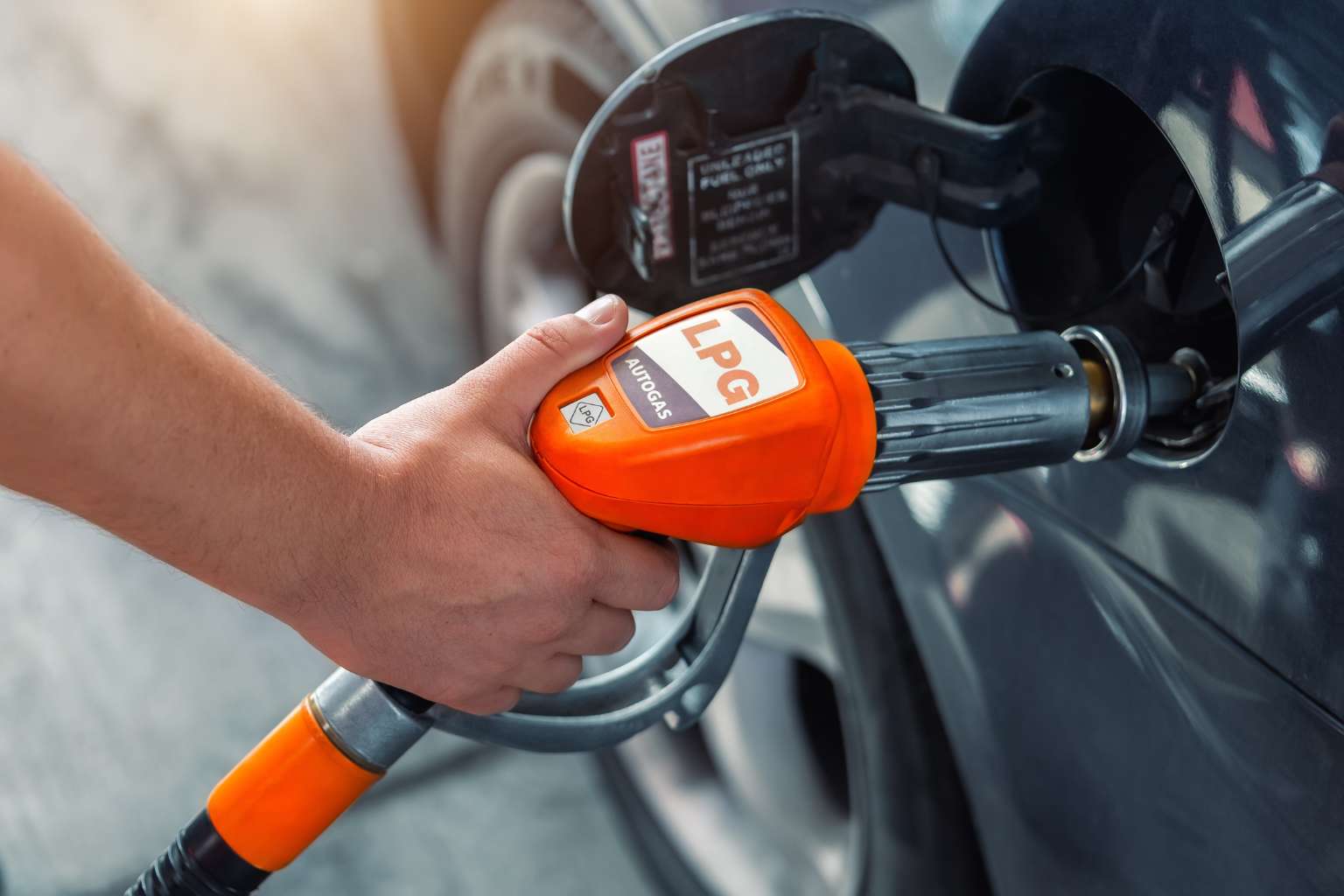
Quick answer
Most LPG systems need a service every 12 months or 20,000 km, whichever comes first. Common signs you’re overdue: rough idle on gas, hesitation when the system switches from petrol to LPG, higher gas consumption, dashboard warnings on LPG, a faint gas smell, or hard starting on LPG in cold weather. There’s also a separate compliance job: your LPG cylinder needs requalifying every 10 years under Australian Standards. That’s not part of a regular service and it’s not optional if you want to keep refilling the tank legally.
LPG service and repair costs at a glance
| Service item | Typical interval | Cost guidance |
|---|---|---|
| 12-month LPG service | 12 months or 20,000 km | $200–$400 |
| LPG injector clean or replacement | As needed (typically 60,000–100,000 km) | $300–$800 |
| LPG converter / regulator service | Checked at every service; replace when failing | $200–$400 |
| LPG filter replacement | Every 12–24 months (often included in service) | $30–$80 |
| 10-year cylinder requalification | Every 10 years from last test date | $200–$500 |
| Full LPG system diagnostic | When symptoms appear between services | $150–$250 |
Costs are general Australian market guidance, not VP Autocare quotes.
Symptoms your LPG system needs servicing
- Rough idle when you’re running on gas, not on petrol. If the engine idles smoothly on petrol but lopes or vibrates as soon as you flick across to LPG, the issue is on the gas side specifically. The most common cause is a worn or dirty converter that can’t deliver a steady gas flow at low rpm. A clogged gas filter does the same thing. Both are routine service jobs.
- Hesitation or a stall when switching from petrol to LPG. Dual-fuel systems switch over automatically once the engine warms up. If yours coughs, hesitates or briefly stalls during the changeover, the converter is usually struggling to vaporise enough gas quickly. Cold mornings make it worse because liquid LPG needs more heat to convert to gas.
- Higher gas consumption than usual. If you used to get 400 km out of a tank and now you’re only getting 320, something has shifted. The usual suspects are a leaking regulator, worn injectors that aren’t atomising properly, or an ECU setting that’s drifted out of tune. A service includes a fresh tune that often gets the economy back to where it was.
- A check-engine or LPG warning light that only comes on when you’re running on gas. Modern dual-fuel systems have their own ECU running alongside the petrol ECU. A warning that only appears on LPG, then disappears when you switch back to petrol, points to a fault on the gas side: an injector, a sensor, the lock-off valve, or the gas-side ECU itself. A diagnostic scan tells you which.
- A faint smell of gas inside the cabin or near the boot. LPG is odourless on its own. The smell you notice is a sulphur-based marker added to the gas so leaks are easy to detect. If you can smell it, you have a leak. Stop driving, shut the manual valve at the tank, and book the car in before you do anything else.
- Hard starting on LPG, especially on cold mornings. Most dual-fuel systems are set up to start on petrol and switch to LPG once warm, so cold starts on gas are rare by design. If your system is set to start on gas and it’s struggling, the regulator is most likely the cause. If it’s also struggling to start on petrol, you’ve got an unrelated ignition or fuel issue and you need a full diagnostic.
What’s included in an LPG service
A standard 12-month LPG service is a check of every part of the gas system that wears, leaks or drifts out of tune. At a workshop with a licensed LPG mechanic, it usually covers:
- Filter replacement. The gas filter catches debris from the tank before it reaches the injectors. A clogged filter is one of the most common causes of poor performance.
- Converter or regulator check. The converter turns liquid LPG into gas vapour before it enters the engine. Internal seals wear with age and the unit is usually rebuilt or replaced around the 10-year mark.
- Lock-off valve test. This valve shuts the gas supply off when the engine isn’t running. Even a small leak here will produce a noticeable gas smell.
- Hose and connection inspection. Every line, every fitting, every clamp. Cracked hoses and loose connections are the most common reason an LPG vehicle fails a roadworthy.
- Switch-over solenoid check. This is the component that handles the transition from petrol to gas. Faulty switch-over is one of the most common LPG complaints we see.
- Injector inspection. Most systems built since the mid-2000s use either VPI (vapour phase injection) or LPI (liquid phase injection) injectors. Both wear and need cleaning or replacing over time.
- ECU diagnostic scan. Reads stored fault codes on the LPG ECU and confirms the mixture is within spec.
- Tune. Fine-tunes the air-to-fuel ratio so the engine runs cleanly and economically on gas.
Service or diagnostic: which one do you book?
Two paths into a workshop with an LPG vehicle, and they’re different jobs.
Book a service if:
- You’re at the 12-month mark or 20,000 km since the last LPG service
- The car is running fine but the interval is due
- You want a routine check before any symptoms appear
Book a diagnostic first if:
- Symptoms have started since your last service
- The car was running fine a few months ago and isn’t now
- You’re losing power, hesitating, or burning through more gas
If you’re not sure which applies, look at when the last service was done. A recent service with new symptoms means a diagnostic. An overdue service means book both at once and address anything the scan finds during the same workshop visit.

The 10-year cylinder requalification
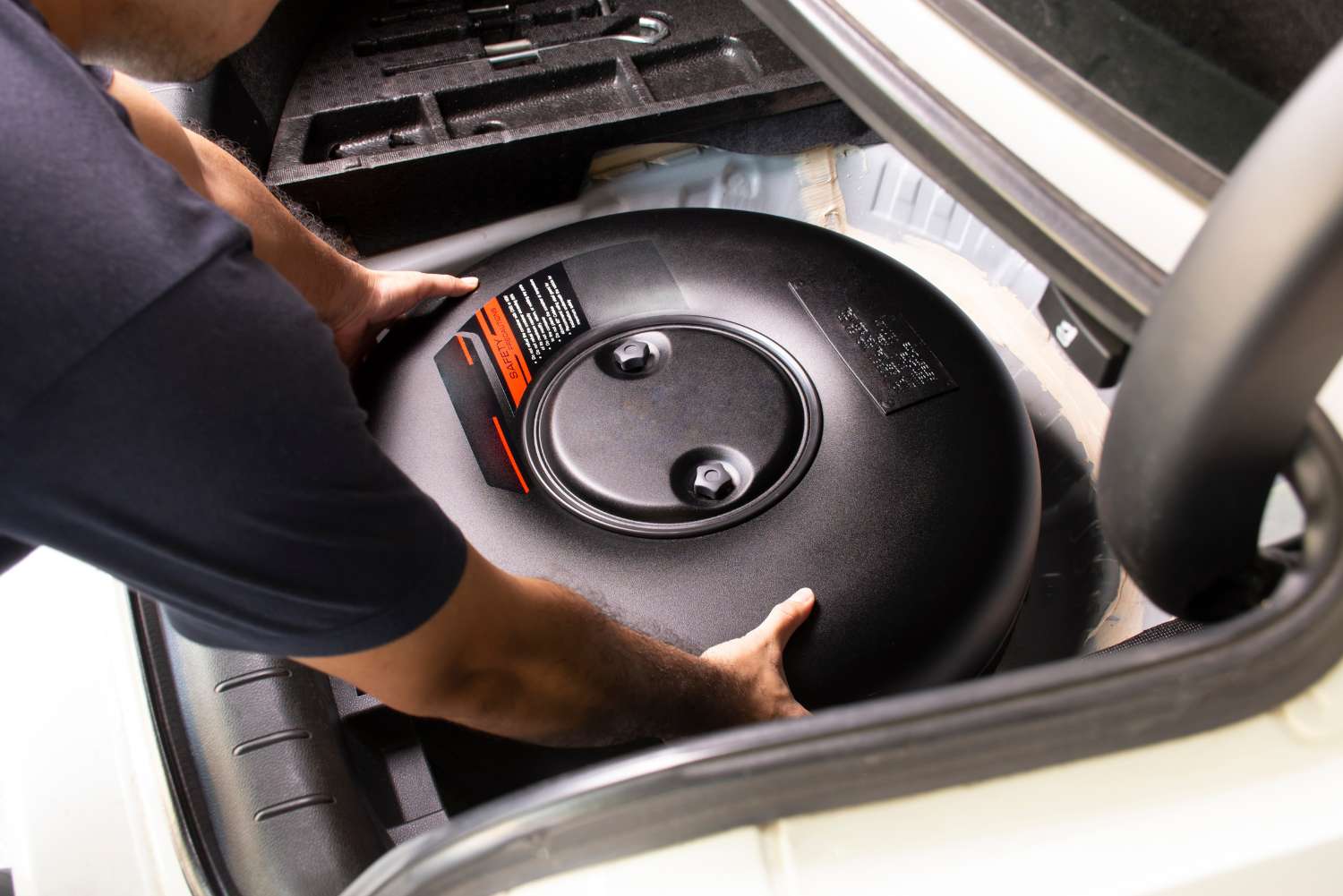
This is the one that catches most LPG owners out. Australian Standards require LPG tanks fitted to vehicles to be inspected and re-certified every 10 years. The clock starts from the date stamped on the tank, not from when the car was built or when you bought it. A cylinder that’s past its certification date legally cannot be refilled, even if the system is working perfectly. Service stations check the date stamp at the pump and will refuse to fill an expired tank.
The date stamp is on a metal plate fixed to the cylinder. On a boot-mounted tank, it’s usually visible once you lift the carpet or the false floor. On an underbody tank, it’s stamped near the valves. The format is month and year, and you’re looking for the most recent test date, not the original manufacture date if the tank has already been retested.
Requalification involves removing the tank, stripping the valves, inspecting the internal and external surfaces for corrosion or damage, pressure-testing the cylinder, replacing seals and valves where needed, and re-stamping the tank with the new test date. The job can only be done at an authorised gas cylinder test station. In Victoria, expect $200–$500 for a routine re-test on a healthy tank, more if valves need replacing.
If the tank fails the inspection, usually due to corrosion or impact damage that can’t be repaired, it’s condemned. You then either replace the tank, or have the LPG system removed and switch back to petrol-only. For an older vehicle, the cost of a new tank and installation sometimes pushes the decision toward removal.
Frequently asked questions
Is LPG cheaper to run than petrol in 2026?
For a dual-fuel vehicle that’s already converted, yes. LPG still costs roughly half the price of petrol per litre at the bowser. The catch is that LPG vehicles use 20–30% more fuel by volume than petrol, so the real-world saving works out closer to 30–40%. For high-km drivers that adds up quickly. For someone doing 5,000 km a year, the saving is small.
Can I service my LPG system at any mechanic?
No. LPG work has to be done by a licensed LPG mechanic at an accredited workshop. A general mechanic without LPG accreditation can service the petrol side of a dual-fuel car but legally can’t touch the gas side.
What happens if I miss the 10-year cylinder requalification?
The tank is no longer legal to refill. Service stations check the date stamp and will refuse to fill an expired tank. You won’t usually be fined for driving with an expired tank, but you can’t use the gas system either. To get back on gas, you book the requalification, and if the tank fails, you replace it or remove the system.
How long should an LPG system last?
The tank itself, fitted properly and re-certified on schedule, can stay in service for 20–30 years. Most other components, including the converter, injectors, hoses and lock-off valve, have a working life of around 10–15 years before they need rebuilding or replacing. With regular servicing, an LPG system installed in a well-maintained vehicle will often outlast the petrol side.
Can I switch back to petrol-only if I no longer want the LPG system?
Yes. If the cost of requalification, a new converter or a tank replacement has pushed you to the point where keeping the LPG system isn’t worth it, the system can be removed and the car run on petrol alone. The job includes removing the tank, sealing fuel lines and updating the registration to reflect a single-fuel vehicle.
Book your LPG service or diagnostic
If your dual-fuel car is hesitating on the gas side, due for its 12-month service, or has a cylinder approaching the 10-year mark, the right next step is a workshop visit with a licensed LPG mechanic. At VP Autocare in Tullamarine, we handle LPG servicing, diagnostics, cylinder requalification and full system repairs for drivers across Westmeadows, Gladstone Park, Greenvale and the wider airport corridor. Book a service if you’re at the interval, a diagnostic if symptoms have started, or both at once if you’re due and the car is also playing up. Call us on (03) 9335 2488 or book your LPG service online.


