

Major vs minor car service – what’s the difference and which do you need?
You’re due for a car service. The workshop asks whether you want a minor or a major. You don’t know the difference, and you’re not entirely sure you’re not about to pay for work your car doesn’t need.
Most car owners feel this way, and most mechanics don’t explain it well. So here’s a straight answer – what each service includes, what it costs, and how to figure out which one your car is due for right now.
What’s in a minor car service?
A minor service covers the essentials that keep your engine running clean and your car safe to drive. For most vehicles, that means:
- Oil and oil filter change
- Top-up of key fluids (coolant, brake fluid, windscreen washer)
- Tyre pressure and condition check
- Visual inspection of brakes, suspension, and steering
- Check of lights, wipers, and battery condition
A minor service usually takes between 45 minutes and an hour and a half. Across the industry, you can expect to pay somewhere between $180 and $300 for a standard passenger car.
Most manufacturers recommend a minor service every 10,000 to 15,000 km, or every six months – whichever comes first.
What’s in a major car service?
A major service includes everything above, plus a deeper inspection and replacement of parts that wear down over time. On top of the basics, a major service typically adds:
- Spark plug replacement
- Air filter and cabin filter replacement
- Coolant flush and replacement
- Fuel filter replacement (where applicable)
- More thorough brake inspection – measuring pad thickness and rotor condition
- Detailed suspension and steering check
- Gearbox or differential fluid check or replacement
Because more work is involved, a major service takes two to four hours. For a standard passenger car, expect to pay between $350 and $600. European and luxury vehicles often cost more due to specialised parts and longer labour times.
Most manufacturers schedule a major service every 30,000 to 45,000 km, though the exact interval varies by brand and model.
What this looks like for a real car
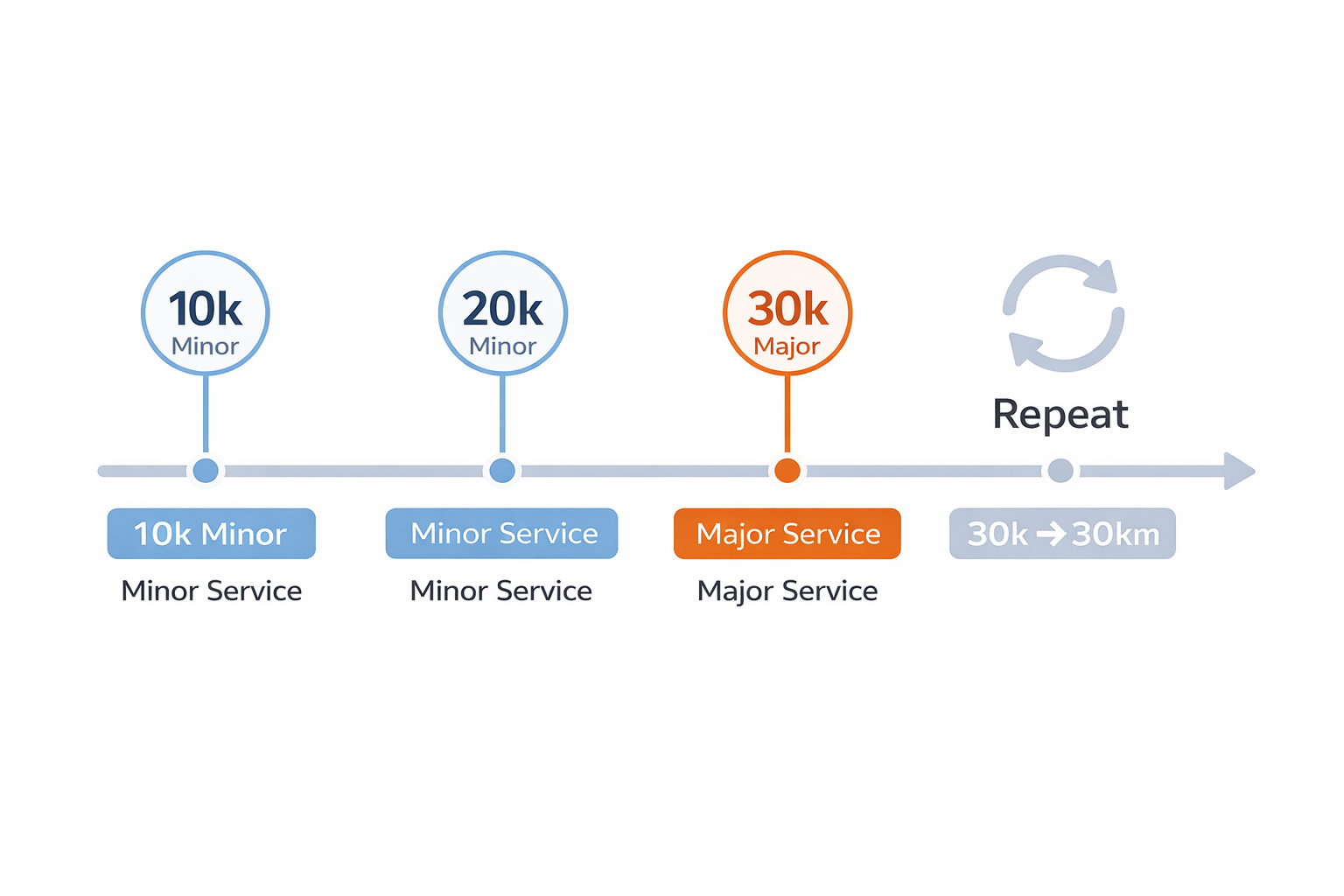
Take a Toyota Corolla – one of the most common cars on Australian roads. Toyota schedules services every 10,000 km or six months.
At 10,000 km, the Corolla gets what’s essentially a minor service: oil and filter change, fluid checks, tyre and brake inspection. The 20,000 km service is similar, with a few extras like an air filter check. At 30,000 km, things get more involved – spark plugs, brake fluid, and more detailed inspections come into play. That’s your first major service.
The pattern repeats from there. Minor services in between, with a more thorough major service roughly every 30,000 km. Your logbook lays out exactly what’s needed at each interval – and this is true for every make and model, not just Toyota.
How to work out which service your car needs
Knowing the difference between the two is one thing. Working out which one your car needs right now is another.
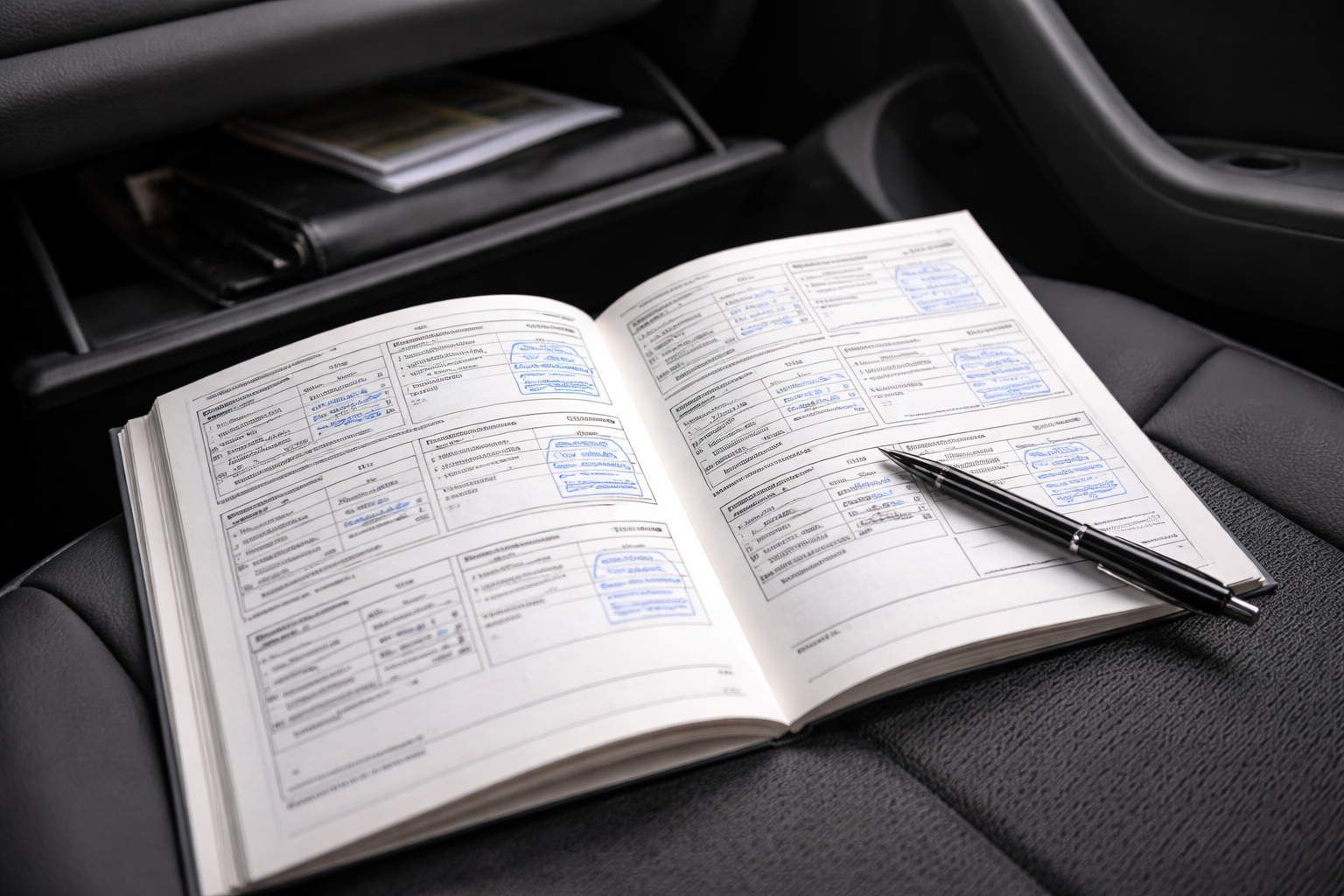
Open your glovebox and find your owner’s manual or logbook. Look for the service schedule – it’s usually a table that lists what needs to happen at each kilometre or time interval. Check your odometer and find where you sit in that schedule. The logbook will tell you whether your next service is a minor or major one.
If your logbook has been stamped by a previous mechanic, look at the last entry. It should show the date, the odometer reading, and what was done. Your next service is whatever falls next in the schedule.
If you’ve lost your logbook or bought the car secondhand without one, any good mechanic can look up your vehicle’s manufacturer schedule using your registration or VIN number. You don’t need the physical book to follow the right service plan.
What a thorough mechanic checks beyond the logbook
Here’s something worth knowing: a logbook service schedule is a minimum standard. It’s what the manufacturer says must be done to keep your warranty valid. But a good independent mechanic will go further.
A thorough service also includes things like checking for oil leaks underneath the vehicle, inspecting the exhaust system for cracks or corrosion, testing the air conditioning, looking at drive belts and hoses for signs of wear, and scanning for stored fault codes in the car’s computer. These aren’t always listed in the logbook. They’re just part of doing the job properly.
This is one reason two mechanics can quote different prices for the same service. A cheaper quote might mean they’re only ticking the boxes from the logbook. A slightly higher quote might include a more complete inspection that catches problems early – before they turn into expensive repairs. If you’re doing a lot of stop-start driving around Tullamarine or sitting in crawling traffic on the freeway, that kind of wear adds up faster than most people realise.
Am I paying a fair price?
Knowing what’s included in each service type is useful. But for most people, the real question is simpler: am I paying a fair price, and am I getting what I’m paying for?
Ask your mechanic for an itemised quote before any work starts. A good workshop will break down parts and labour separately. After the service, you should get an itemised invoice that matches the quote – and they should tell you about anything extra they found before they fix it, not after.
If a mechanic can’t tell you what’s included in their service price, that’s worth questioning. If they push a major service when your logbook only calls for a minor, that’s another flag.
Not sure which service your car is due for?
Bring your car into VP Autocare and we’ll check your logbook, look up your service history, and tell you exactly what your vehicle needs. No guesswork, no upselling – just the right service at the right time.
You don’t have to go to the dealer
If your car is still under warranty, you might think you need to get it serviced at the dealership. You don’t.
Under Australian Consumer Law, any qualified mechanic can carry out your logbook service without affecting your manufacturer’s warranty – as long as they follow the manufacturer’s specifications and use parts that are fit for purpose. The ACCC has confirmed this repeatedly, and it applies whether or not your logbook says ‘authorised dealer.’ An independent mechanic can stamp your logbook just the same.
The one exception is some extended or dealer-specific warranties, which may have their own conditions. But your standard manufacturer’s warranty is protected.


